

Cells use osmolytes
Cells take in small molecules such as taurine and betaine to adjust their volume, and water follows them. HydroSure includes five amino-acid osmolytes.
HydroSure pairs five amino-acid osmolytes with creatine. Osmolytes are small molecules your cells use to manage their own water, and water moves to where they are. This page shows the cell biology HydroSure is built on, then each of the six actives with its dose and the reason for it. Whether a supplement changes the water inside cells in healthy people is still an open question.
Cells take in small molecules called osmolytes to adjust their volume, and water follows them in. HydroSure is built around that biology, with five amino-acid osmolytes and creatine.
Drag to turn the cell. Slide to add osmolytes and watch water follow. Tap a molecule to see what it is.
Osmolytes in a cell. The molecules shown are the six in HydroSure. Hover or tap one to see what it is.
Cells take in small molecules such as taurine and betaine to adjust their volume, and water follows them. HydroSure includes five amino-acid osmolytes.
No added sodium, potassium or magnesium. If you sweat heavily or train in heat, get sodium and fluid from food or a separate product.
Formulated to support daily hydration,* with 5 g of creatine for high-intensity exercise performance.*
An illustration of how cells use osmolytes, not a picture of what HydroSure does in the body. Whether a supplement changes the water inside cells in healthy people is still an open question.
*These statements have not been evaluated by the Food and Drug Administration. This product is not intended to diagnose, treat, cure, or prevent any disease.
Listed in label order. Each profile gives the form the ingredient comes in, the job it does in the formula and the thinking behind its dose.
† Daily Value not established for any of the six. The only other ingredient is silicon dioxide. See the full Supplement Facts panel on the product page.
Six actives, and one other ingredient: silicon dioxide, which keeps the powder free-flowing.
No added sodium, potassium or magnesium. If you sweat heavily or train in heat, get sodium and fluid from food or a separate product.
No caffeine or any other stimulant on the label. HydroSure is not a pre-workout.
The label lists no flavors and no sweeteners, natural or artificial. What goes in the water is the six actives and silicon dioxide.
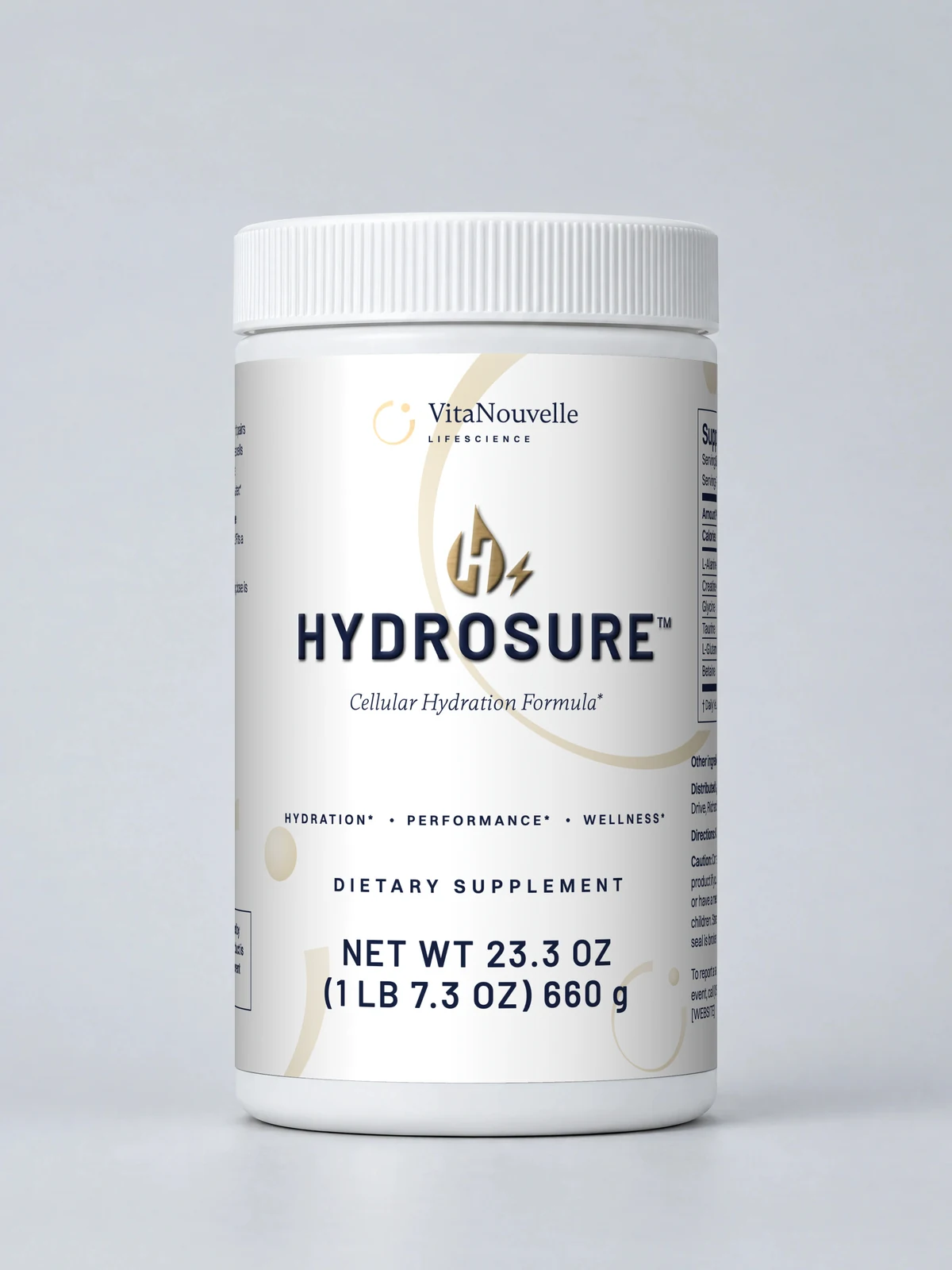
This is the real label, wrapped on the canister. Drag to turn it, or jump to a panel.
Net weight23.3 oz (1 lb 7.3 oz) 660 g
DirectionsMix 2 scoops in 64 ounces of water.
CautionConsult your physician prior to using this product if you are pregnant, nursing, taking medication, or have a medical condition.
StorageKeep out of reach of children. Store in a cool, dry place. Do not use if safety seal is broken or missing.

Five amino-acid osmolytes and 5 g of creatine. 21 grams of actives per serving, not an electrolyte formula, in a 23.3 oz (660 g) tub.
Prices are proposed and pending confirmation. Checkout opens at launch.